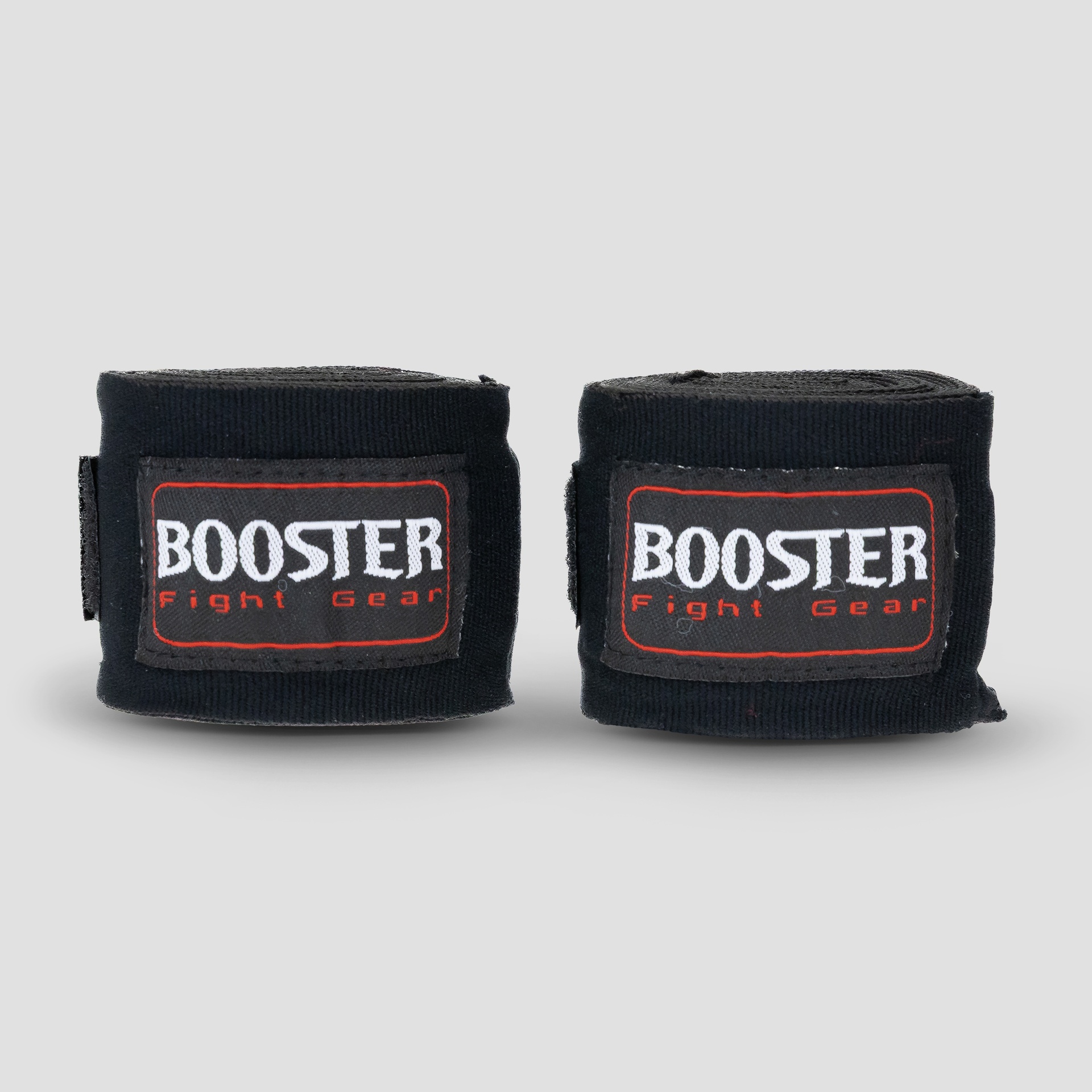
How to wrap hand wraps: step by step
Loop around the thumb, three times around the wrist, three times over the knuckles, between the fingers, secure the thumb, finish off on the wrist.
This is how you wrap your hands: loop around the thumb, three times around the wrist, three times over the knuckles, between each finger, secure the thumb and finish off on the wrist with the velcro. The goal is a solid wrist, protected knuckles and a fist that can still close properly. After a few tries you'll do it in under a minute.
Why hand wraps are essential
Hand wraps do three things a glove alone cannot. They hold the small bones in your hand together on impact, they support your wrist so it doesn't buckle on an angled punch, and they absorb sweat so your glove stays clean and dry. That is why they are compulsory in every gym, including for bag work and pads.
Many beginners skip them because wrapping looks like a hassle. It is a habit you pick up in a week, and you feel the difference straight away: a glove sits tighter and you punch with more confidence. In our shop you'll find hand wraps from Booster, Twins Special and King Pro Boxing in various lengths; for adults, 4.5 metres is the standard.
Preparation
Unroll the wrap and find the end with the thumb loop. Take off any rings. Spread your fingers and keep your hand relaxed; if you wrap with a clenched fist, the wrap will end up too loose. If you wrap with straight, spread fingers, it will sit exactly right when you make a fist.
Keep the wrap under light tension while wrapping, but don't pull it tight. A wrap that is too tight cuts off the blood supply within minutes; too loose, and it shifts inside the glove. The right tension feels like a firm handshake. The wrap must lie flat, without folds, especially over the knuckles and in the palm.
Step by step
- Step 1: Hook the loop around your thumb and lay the wrap over the back of your hand towards the wrist.
- Step 2: Wrap three times around the wrist, from the inside outwards. This is your wrist support.
- Step 3: Go diagonally over the back of the hand to the knuckles and wrap three times around the knuckles, just below the fingers. Keep the fingers spread.
- Step 4: Go back to the wrist and take the wrap from the wrist between the little finger and ring finger, back to the wrist. Repeat between ring finger and middle finger, and between middle finger and index finger.
- Step 5: Wrap once around the thumb and secure it by making a turn around the wrist.
- Step 6: Use what is left for extra turns over the knuckles and finish off with the velcro on the wrist.
Make a fist. If the knuckle area feels solid and the wrist feels snug, it sits right.
Check: does the wrap sit properly?
Do three checks after wrapping. Make a fist and open it: that should go smoothly without the wrap pulling or your fingers turning white. Bend your wrist downwards: there should be clear resistance. And look at the knuckles: there should be a flat, even layer over them without a lump on one knuckle.
If your fingers tingle after a minute, take it all off and start again with less tension. If the wrap feels looser after a few punches, you wrapped too slack or wrapped with a fist. Both are beginner mistakes that disappear quickly. Don't hesitate to ask your coach to watch you once; most coaches are happy to demonstrate a wrap.
Common mistakes
- Wrapping too tight, so the hand goes numb.
- Wrapping with a clenched fist, so the wrap ends up loose.
- Skipping the finger turns: then the wrap slides over the knuckles.
- Not securing the thumb, so it keeps moving freely.
- Wrapping the wrist only once; three turns is the minimum.
- Leaving folds and creases over the knuckles: they chafe inside the glove.
A final mistake is using wraps that are too short. With 2.5 metres you only manage with small hands; for an adult, 4.5 metres is the right length to do all the steps and still finish off on the wrist. In the guide on length and types you can read more about the differences.
Inner gloves as an alternative
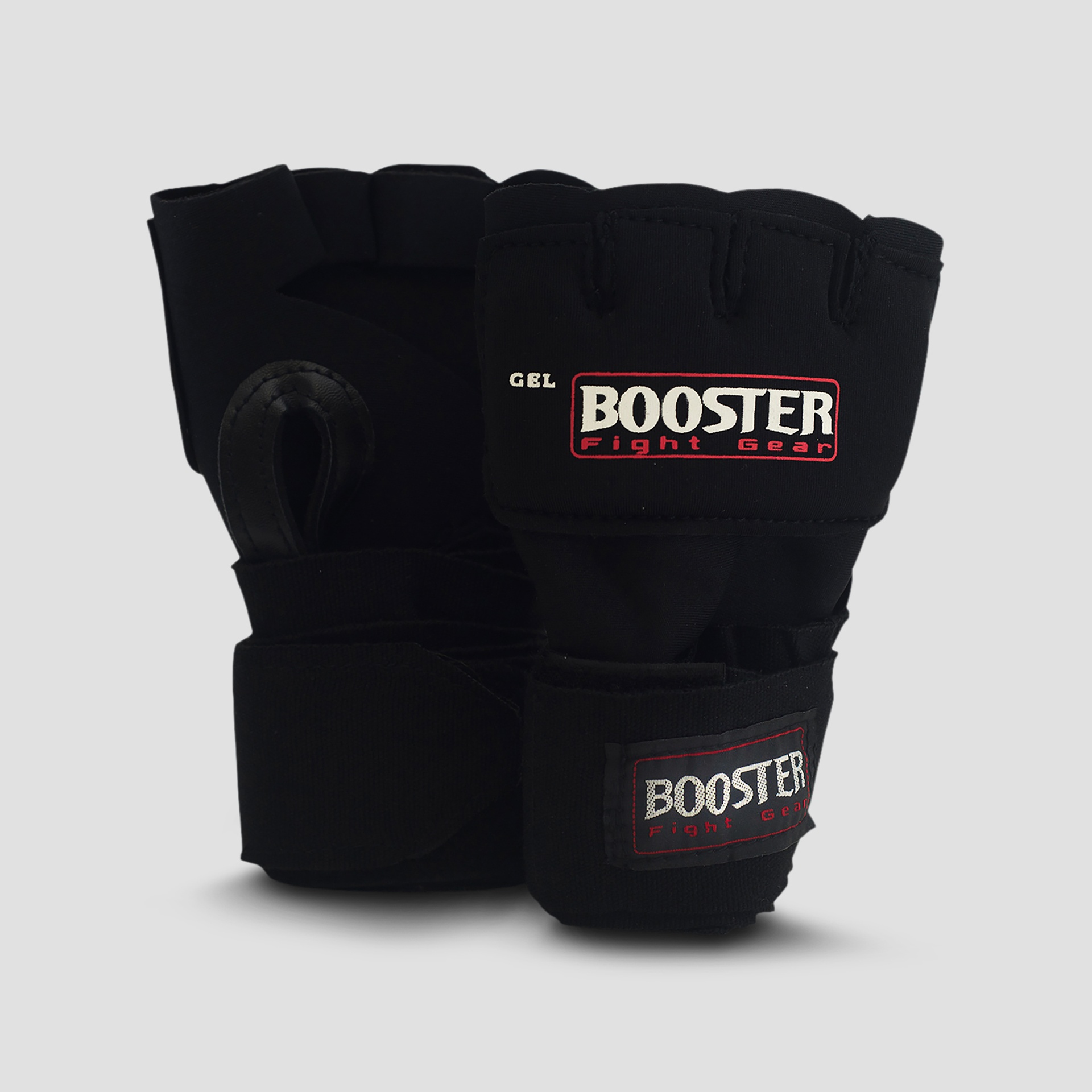
If you don't want to wrap, there are inner gloves with gel over the knuckles and a short wrist strap. You put them on like a normal glove, in a few seconds. They protect the knuckles well and absorb sweat, but support the wrist noticeably less than a well-wrapped hand wrap.
For pad work and light bag sessions they are fine; for hard bag work and sparring we recommend regular wraps. A middle ground is the inner glove with a long wrist strap that you wrap yourself. Billy sees both at his pad sessions and is clear about it: anyone who hits hard regularly, wraps. Beginners are welcome to start with an inner glove and switch later.
| Step | Action | Number of turns |
|---|---|---|
| 1 | Loop around the thumb | - |
| 2 | Around the wrist | 3 |
| 3 | Over the knuckles | 3 |
| 4 | Between the fingers | 3 times, wrist-finger-wrist |
| 5 | Around the thumb and secure | 1 |
| 6 | Extra over knuckles, finish on wrist | remainder |
Ordering from anywhere in the EU
PadsByBilly ships from the Netherlands to every EU country: Belgium €7.95, Germany €9.95, other EU countries €14.95, free from €75. No customs or import fees inside the EU; prices include VAT. Delivery usually takes 2–5 working days and you have a 14-day right of withdrawal.
Running a gym or fight school and need hand wraps for the whole team? From €500 order value we make a custom quote with a bigger discount.
Frequently asked questions
How tight should hand wraps be?
Firm, like a good handshake. If your fingers tingle or turn white, it is too tight and you wrap again.
Should I wrap with a fist or an open hand?
With spread fingers and a relaxed hand. Then the wrap sits exactly right as soon as you make a fist.
How long does wrapping take?
After a week of practice about a minute per hand. The first few times you can happily take five minutes.
Can I skip hand wraps for pad work?
Better not. On the pads you sometimes land at an angle and load your wrist. At least an inner glove, preferably wraps.
Why go between the fingers?
Those turns keep the wrap in place on the knuckles and spread the knuckles slightly, which distributes the impact.