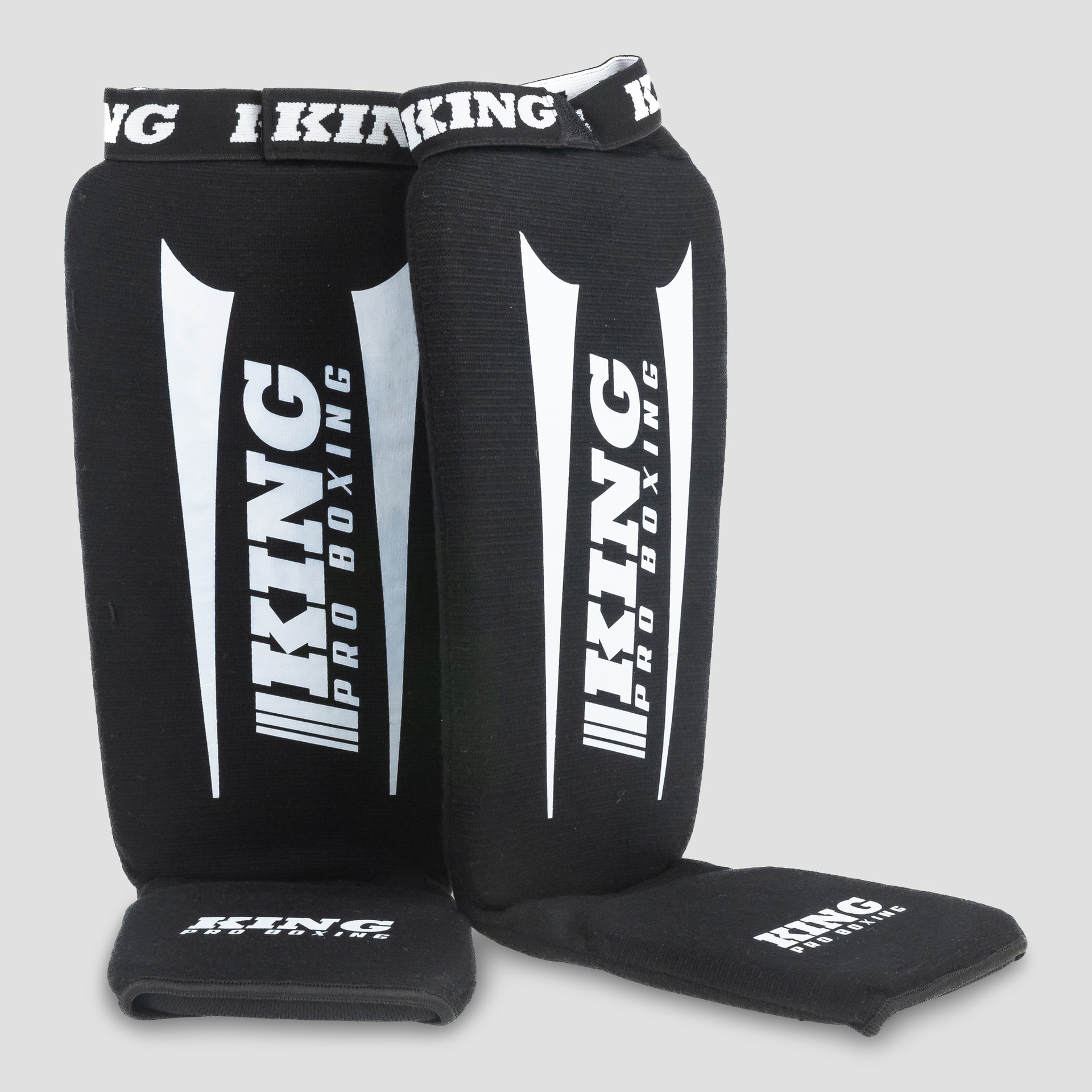
Choosing shin guards: which size and which type?
Measure from below the knee to the ankle for the size (S-XL); choose leather with velcro for sparring and a lighter model or sock-style guard for technique and pads.
You choose shin guards based on two things: the length of your shin and the kind of training you do. You determine the size using your height and the distance from just below the knee to the ankle; most brands run from S to XL. For sparring, choose a sturdy leather model with velcro, like the Twins SGL series; for technique and pads, a lighter model or an elastic sock-style guard will do.
Why shin guards are no luxury
In kickboxing and muay thai you kick with your shin and block kicks with your shin. Without protection it's bone on bone, and you'll feel that for days. Shin guards make it possible to train with a partner without every round hurting. They also protect your instep, which often takes the hit on a blocked kick.
At most kickboxing gyms, shin guards are mandatory as soon as you kick with a partner, even in technical drills. Only pure bag work and pad work can be done without them, although many people train with a light guard even then to spare their instep. In our shop you'll find shin guards from Twins Special, Booster, King Pro Boxing and Fairtex x Booster.
Finding your size
The size of a shin guard is about the length of your shin, not your shoe size. Measure from two fingers below your kneecap to just above your ankle bone. Compare that with the brand's size chart; most brands also give a rough guide by height:
- S: up to around 1.65 m
- M: 1.65 to 1.75 m
- L: 1.75 to 1.85 m
- XL: from 1.85 m
The guard should run from just below the knee to the ankle. If it's too short, part of your shin is exposed; too long, and it presses against your knee or slides over your foot. If you're between two sizes, decide based on your calf circumference: wide calves need the larger size.
Leather with velcro: for sparring
The classic shin guard is a sturdy, padded shield of leather or synthetic with two velcro straps at the back and an instep piece that sits around the foot with an elastic band. This type offers the most protection and is the standard for sparring. The padding spreads the impact and the hard outer shell stops your partner's instep from chopping into your shin.
The Twins SGL series is the best-known example: thickly padded, well finished and good for years of use. Booster and King Pro Boxing have comparable models, often slightly slimmer. When choosing, pay attention to the width of the shield (it has to cover your shin completely) and to the velcro straps: they need to be wide and close firmly, or the guard will rotate while you kick.
Elastic sock-style guard: for technique and pads
A sock-style shin guard is an elastic sleeve with a thin layer of padding at the front. It fits snugly, doesn't rotate and is light, so you kick faster and feel your foot better. The trade-off is limited protection; for sparring with full-power kicks it's not suitable.
This sock is ideal for pad work, bag work with kicks, light technique training and warm-ups. Many fighters have both: the sock for daily training and the leather guard for sparring days. Get the size right on a sock; because it's elastic, a size too small feels like a tight bandage and a size too big slides down while you kick.
Fit and strapping them on properly
A shin guard should sit firmly without cutting off your calf. Fasten the bottom strap first, then the top one. The top strap sits just below the back of the knee; the bottom one around the narrowest part of your lower leg. The instep piece should reach your toes but leave the toes themselves free.
If the guard rotates while you kick, the straps are too loose or the size is too big. If it chafes behind your knee, it's too long. Many fighters wear a thin sock or a sock-style shin guard under the leather guard to prevent chafing and absorb sweat. That also extends the life of the lining.
Care and replacement
Wipe shin guards with a damp cloth after training, open them up to dry and spray them now and then with an antibacterial spray. Never in the washing machine; the padding won't survive it. Elastic socks can be washed, on a gentle cycle.
Replace the guard as soon as the padding on the shin gets noticeably thinner, the velcro no longer sticks or the lining comes loose. A leather model from Twins or Booster lasts for years at two sessions a week. An elastic sock wears out faster: the elastic often goes after a year and the guard then slides down.
| Size | Height (guide) | Shin length |
|---|---|---|
| S | up to 1.65 m | approx. 30-33 cm |
| M | 1.65-1.75 m | approx. 33-36 cm |
| L | 1.75-1.85 m | approx. 36-39 cm |
| XL | from 1.85 m | approx. 39-42 cm |
Ordering from anywhere in the EU
PadsByBilly ships from the Netherlands to every EU country: Belgium €7.95, Germany €9.95, other EU countries €14.95, free from €75. No customs or import fees inside the EU; prices include VAT. Delivery usually takes 2–5 working days and you have a 14-day right of withdrawal.
Running a gym or fight school and need shin guards for the whole team? From €500 order value we make a custom quote with a bigger discount.
Frequently asked questions
How do I measure for shin guards?
Measure from two fingers below the kneecap to just above the ankle and compare with the brand's size chart. Height is a good first indication.
Which shin guards for sparring?
A leather model with velcro and thick padding, like the Twins SGL series. An elastic sock is too thin for that.
Can I spar with a sock-style guard?
For light technical sparring it can work, but not with power kicks. Check with your trainer; most gyms require a leather guard.
Is the instep piece attached to the guard?
On most leather models, yes: it hangs from the shield and sits around the foot with an elastic band. On socks, the instep is part of the sleeve.
What if I'm between two sizes?
Decide by calf circumference: wide calves the larger size, narrow calves the smaller one. A guard that's too long presses against the knee.